Last Updated: October 25, 2026
Quick Summary
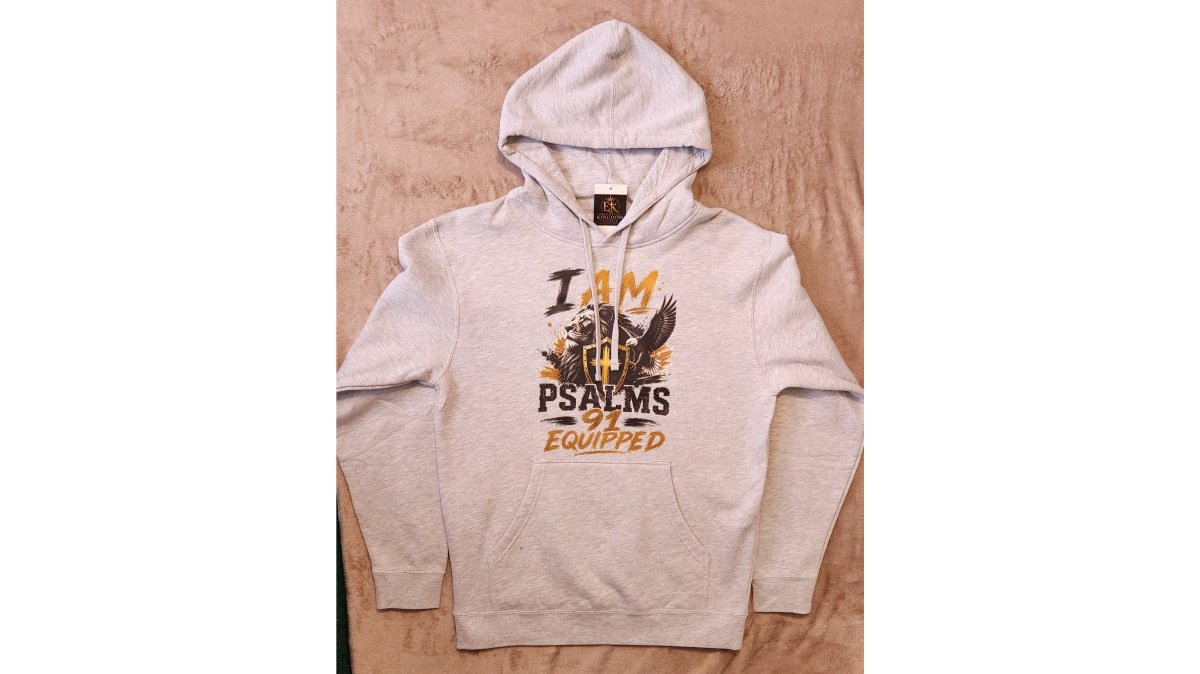
Expensive faith clothing is worth it only when the premium buys verifiable quality, such as heavier fabric, better print methods, and reinforced seams, plus a real mission behind the brand. Run the cost-per-wear math first: a $55.43 hoodie worn 120 times costs about $0.46 per wear, while a cheap piece that pills after three months costs more.
- Check the spec sheet for fabric weight in oz/yd², fiber percentages, and print method before buying.
- A 6.0 oz/yd² cotton tee should feel noticeably denser than a 4.5 oz/yd² one.
- Wash inside out on cold, max 90°F, skip fabric softener, and hang dry to extend shirt life.
- Ask what percentage of proceeds goes to the mission; if no figure is stated, assume it is secondary.
- Skip the premium tier when the spec sheet is vague, the design is generic, or the price strains your budget.
Table of Contents
- What You're Actually Paying For in Faith Clothing
- How to Identify High Quality Apparel Before You Buy
- The Best Fabric for T-Shirts and Hoodies That Last
- Cost per Wear Clothing: The Math That Settles the Argument
- How to Make T-Shirts Last Longer So the Price Pays Off
- When Expensive Faith Clothing Is Not Worth It
- Building a Wardrobe That Balances Faith, Quality, and Budget
- Frequently Asked Questions
What You're Actually Paying For in Faith Clothing
Faith clothing is apparel that carries religious messaging, and the price gap between a $21 tee and a $55 hoodie rarely comes down to the words printed on it. The Christian clothing industry in the United States generates $4.5 billion in annual sales, according to Forbes, citing Fibre2Fashion, and that volume has pushed prices across a wide range.
Here is the uncomfortable truth most brand guides skip: a premium price does not automatically buy premium construction. A Fashion Institute of Technology summary of expert buying advice makes the point plainly, warning shoppers not to judge clothing by label and price alone, since lower-priced pieces sometimes outperform.
So what are you actually paying for? Four things, and only four:
- Fabric weight and fiber content. A 6.0 oz/yd² cotton tee behaves differently from a thin 4.5 oz/yd² one.
- Print method. Screen printing and DTG wear at different rates.
- Construction details. Taped shoulders, side seams, ribbed collars, double-needle hems.
Everything else, the packaging, the influencer photos, the trendy drop schedule, is marketing. When you can separate those four cost drivers from the noise, the "worth it" question gets much easier to answer.
How to Identify High Quality Apparel Before You Buy
High quality apparel is clothing built with heavier fabric, reinforced seams, and a print method suited to the garment, all of which extend usable life.

Start with the spec sheet, not the product photo. Brands that believe in their construction publish fabric weight in oz/yd², fiber percentages, and print method. Brands that don't are usually hiding something thin. If a spec sheet is missing, treat that as a data point: you cannot verify what the brand won't disclose.
A Five-Point Independent Inspection Checklist
Use the same sequence a merchandiser or quality inspector would use. None of these checks requires special equipment, and all of them can be done in a fitting room or with a garment you already own.
-
Fabric weight and hand-feel. Compare the stated oz/yd² against a garment you already trust. A 6.0 oz/yd² cotton tee should feel noticeably denser than a 4.5 oz/yd² one. Hold it up to a window: if light passes through easily, the fabric is thin. Heavier knits drape with more structure and resist the see-through problem that plagues lightweight tees.
-
Fiber content. Check the percentage, not just the fiber name. A "cotton blend" can be 60% polyester and 40% cotton, which changes shrinkage, pilling, and breathability. Ring-spun cotton spins fibers tighter for a smoother, stronger yarn; open-end cotton is cheaper and coarser. If the label lists only "cotton" with no percentage, ask why.
-
Stitching and seam construction. Turn the garment inside out. Look for taped shoulder seams (a strip of fabric covering the seam) that resist neckline stretching. Side seams hold shape through washing; tubular tees with no side seams can twist over time. Double-needle hems at sleeves and bottom resist fraying. Run a thumb along the seam, loose, uneven, or single-stitch seams are a warning sign.
-
Print method and placement. Screen printing lays down thick, durable ink that survives many wash cycles; direct-to-garment (DTG) printing is softer but can fade faster on high-wear areas. Neither is automatically better, but a brand should tell you which one it uses. Check that the print is centered, that the edges are crisp, and that the ink doesn't crack when you gently stretch the fabric.
-
Return policy and wash testing. A brand confident in its construction offers a reasonable return window and clear care instructions. Before committing to a premium piece, wash a lower-stakes item from the same brand according to the label and inspect it after three to five cycles for pilling, fading, shrinkage, and seam stress. This is the closest you can get to durability testing without owning the garment for a year.
Why Brand Claims and Testimonials Aren't Enough
A five-star review tells you the buyer was happy on delivery day, not that the shirt survived 50 washes. A brand's "premium quality" claim is marketing until it publishes fabric weight, fiber content, and print method.
For a full checklist you can carry into any fitting room, see our guide on how to identify high quality apparel with seven specific checks.
The Best Fabric for T-Shirts and Hoodies That Last
The best fabric for lasting tees and hoodies is 100% cotton or a cotton-poly blend in the medium-to-heavy weight range, roughly 6.0 oz/yd² and up for tees and 8.0 oz/yd² and up for fleece.
Cotton Weight and Blends Explained
Fabric weight is the single most predictive number on a spec sheet. Our I am made new T-shirt uses a 6.0 oz/yd², 100% US cotton body with taped shoulders and no side seams, which is why it holds prints well and keeps its shape.
Ring-spun cotton, which some 2026 apparel guides highlight as a quality marker, spins the fibers tighter for a smoother, stronger yarn. You will pay more for it. Whether that matters depends on how often you plan to wear the piece.
Cost per Wear Clothing: The Math That Settles the Argument
Cost per wear clothing is the purchase price divided by the number of times you actually wear the item, and it is the fairest way to compare a cheap tee against an expensive one. A $21.44 tee worn 40 times costs about $0.54 per wear.
Run the math before you decide:
- Estimate the purchase price.
- Estimate realistic wears per month.
- Multiply by the months you expect the item to last.
- Divide price by total wears.
A $70 piece worn weekly for two years lands near $0.67 per wear. A $20 piece that pills after three months and gets retired costs more per wear despite the lower sticker. This is the calculation that makes faith clothing worth it or not, and it has nothing to do with the message on the chest.
To apply the math to a real purchase, start with a tee like our I am made new T-shirt and work the numbers yourself.

The cost-per-wear math makes the comparison concrete.
| Item | Price | Wears | Cost per wear |
|---|---|---|---|
| Tee | $21.44 | 40 | About $0.54 |
| Hoodie | $55.43 | 120 | About $0.46 |
| Generic piece | $70 | Weekly for two years | Near $0.67 |
| Cheap piece that pills | $20 | Retired after three months | More per wear than sticker |
How to Make T-Shirts Last Longer So the Price Pays Off
Extending a shirt's life is mostly about reducing heat and friction, and the payoff is direct: more wears means a lower cost per wear.
- Wash inside out on cold, max 90°F, to protect the print
- Skip fabric softener, which breaks down cotton fibers
- Tumble dry low or hang dry
A common mistake is treating a $50 hoodie like a $10 one. Cold washing and air drying can add a year or more of usable life, which is the difference between a splurge and a smart buy.
When Expensive Faith Clothing Is Not Worth It
Expensive faith clothing is not worth it when the premium buys nothing you can name: no heavier fabric, no better print, no real mission behind the brand. A Reddit commenter in r/Christianity contrasted $70-$80 pieces with apparel they found more affordable, which is a fair warning that price and quality do not always travel together. But the decision is broader than construction alone, it also involves ethical sourcing, charitable claims, and whether the purchase fits your actual budget.
The Ethical and Financial Trade-Offs Nobody Mentions
A higher price does not automatically mean better labor practices or a larger charitable contribution. Some premium brands publish factory audits, sourcing details, and the percentage of revenue that goes to giving; others use "mission" language as a marketing layer with no verifiable numbers. Before you pay a premium for a faith brand, ask three questions:
- Where is it made, and can the brand prove it? A brand that can name its factory or supplier and share audit results is more accountable than one that says "ethically made" with no details.
- What percentage actually goes to the mission? "A portion of proceeds" can mean 1% or 50%. If the brand won't state a figure, assume the mission is secondary to the margin.
- Does spending more signal stronger faith? It does not. Faith is not a price tier, and no verse requires a $70 hoodie. A $21 tee worn faithfully does the same work as a $55 one.
There is also a stewardship argument. If a premium purchase strains a budget, delays debt payoff, or crowds out giving, the math doesn't work regardless of how good the fabric is. A purchase that fits your budget without stress is the more responsible choice.
Budget-Friendly Alternatives That Still Express Faith
You do not need to buy new premium apparel to wear your faith. Several lower-cost paths exist, and each has trade-offs worth weighing:
- Affordable faith brands. Many brands sell tees in the $15-$25 range with adequate construction for casual wear. Check the spec sheet the same way you would for a premium piece; some budget brands publish fabric weight and print method.
- Secondhand and resale. Faith tees and hoodies show up regularly on resale platforms and in thrift stores. You get the message at a fraction of the price, though you may need to inspect for print cracking and seam wear.
- Non-branded garments. A plain heavyweight tee paired with a verse you already own, a patch, or a simple necklace expresses faith without a brand markup. This is often the lowest cost-per-wear option.
None of these alternatives is inherently less faithful. The question is whether the premium tier delivers enough verifiable quality and mission to justify the gap.
A Quick Skip-the-Premium Checklist
Skip the premium tier when:
- The spec sheet is vague. No fabric weight, no fiber content, no print method.
- The design is generic. You are paying for a markup, not original artwork.
- The fit is one-size-fits-all. A brand that ignores body types is not serving you.
If you want to see what the premium tier actually looks like when it is built on real construction, browse our faith hoodies and compare the fabric specs against anything else in your cart.
Building a Wardrobe That Balances Faith, Quality, and Budget
A balanced faith wardrobe is a small, intentional rotation: two or three high-wear pieces you love, a couple of statement items, and nothing you bought on impulse. The goal is not a closet full of premium apparel. It is a closet where every piece earns its cost per wear.
Think in categories. One heavyweight tee handles most casual days. One hoodie covers cool mornings and small groups. One bolder piece does the conversation-starting work.
For practical guidance on letting your clothing open spiritual conversations, read how to share faith through clothing. And if you want to see how mission-driven brands stack up before you commit, our guide to Christian clothing brands with mission lays out what to look for.
The honest answer to whether expensive faith clothing is worth it depends on the garment, not the price tag. Check the fabric weight, check the seams, run the cost-per-wear math, and buy from brands that show their work.
Frequently Asked Questions
Is expensive faith clothing worth it compared to cheaper alternatives?
It depends on what you're comparing. A $21.44 tee and a $40 hoodie from a faith-based brand can both last years if the fabric weight and stitching hold up. The real test is cost per wear: divide the price by the number of times you actually wear it. A garment worn 100 times at $40 costs $0.40 per wear. A $15 shirt worn twice costs $7.50 per wear. Expensive faith clothing is worth it when the construction supports repeat wear and the design fits your daily life, not when you're paying purely for a label.
How can you tell if a Christian T-shirt is good quality?
Check three things before buying. First, fabric weight: tees in the 4.5 to 6.0 oz/yd² range hold their shape better than thin, flimsy cotton. Second, stitching: double-needle hems, shoulder tape, and side seams signal a shirt built to survive washing. Third, print method: screen printing and DTG on quality blanks resist cracking better than heat transfers on cheap fabric. A brand that publishes these specs, like fabric weight and certification, is usually more trustworthy than one that only shows styled photos.
How long should a quality T-shirt or hoodie last?
A well-made cotton tee worn weekly typically lasts one to three years before the collar stretches or the print fades. A medium-heavy hoodie, such as an 8.0 oz/yd² cotton-poly blend, often lasts three to five years with proper care. Longevity depends more on washing habits than price. Cold water, inside-out washing, and low-heat drying add years to any garment. If a faith-based piece falls apart in months, the problem is construction, not the concept of faith clothing.
Should Christians spend more on clothing with religious messages?
There is no biblical requirement to pay more for a shirt with a verse on it. What matters is stewardship: buy pieces you will actually wear and that reflect your values. A small wardrobe of durable faith apparel, worn often, often costs less over time than a pile of cheap shirts that pill and fade. The Christian clothing industry in the US reports about $4.5 billion in annual sales, so plenty of options exist at every price. Spend where quality and message align, and skip the rest.
The real challenge is not finding faith clothing. It is finding pieces that hold up long enough to justify what you paid. Essential Kingdom Apparel builds premium faith-based apparel with modern designs and biblical truth, so your wardrobe becomes a daily statement of identity and purpose. Browse the collection and start with one piece you will wear a hundred times. Get started with Essential Kingdom Apparel and wear your faith with confidence.
